
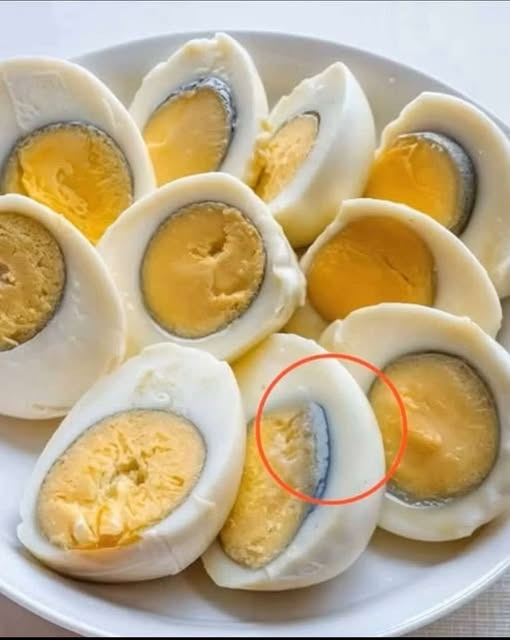
The longer you boil an egg, the more hydrogen sulfide is produced — especially at high heat.
So the green ring is most common when:
- Eggs are boiled too long (over 10 minutes)
- Cooked at a rolling boil (very high heat)
- Not cooled quickly after cooking
✅ The same reaction occurs in overcooked scrambled or fried eggs — just less visibly.
✅ How to Prevent the Green Ring
Want perfectly golden yolks every time? Try these simple tips:
🔥 Pro Tip: Older eggs peel easier, but freshness doesn’t affect the green ring.
❌ Debunking Common Myths
📌 Jacques Pépin once said: “I love the green ring — it means someone took time to cook it well.”
Final Thoughts
That green ring isn’t a flaw. It’s a sign of chemistry — not contamination.
And while you can minimize it with precise timing and cooling, there’s nothing wrong with embracing the occasional green halo.
After all, the best part of a hard-boiled egg isn’t its color. It’s the fact that it’s ready to eat — nutritious, portable, and deeply satisfying.
So whether your yolk is golden or tinged with green… slice it, sprinkle it, savor it.
Because real perfection? It comes from nourishment — not appearance.
