
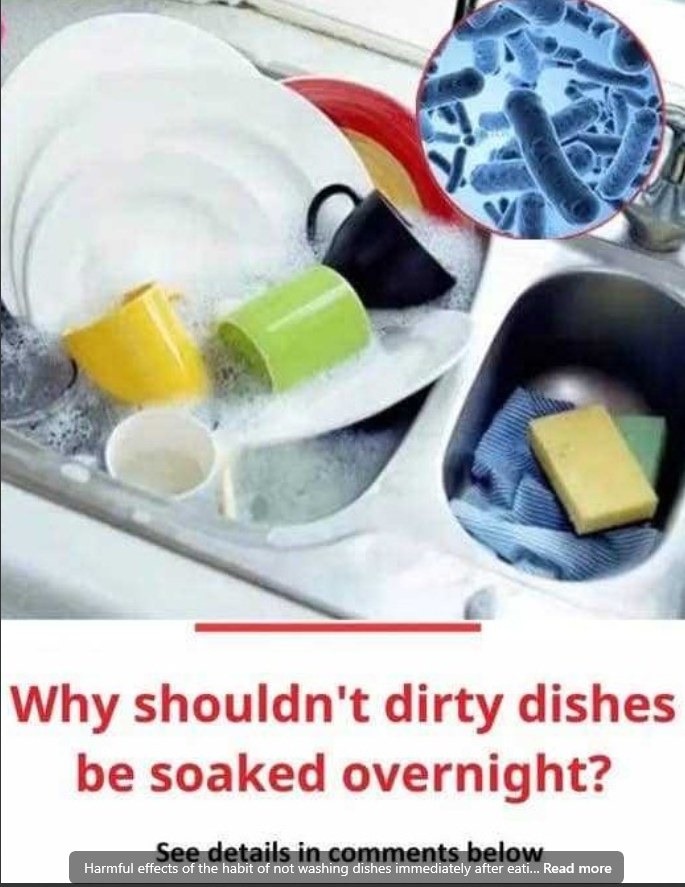
Serving and Storage Tips (Benefits of Immediate Dishwashing):
Maintain a Fresh Kitchen Environment: Washing dishes right after eating keeps your kitchen clean, fresh, and odor-free.
Prevent Bacteria Buildup: Cleaning up promptly reduces the risk of germs spreading to other surfaces or lingering in your kitchen.
Preserve the Quality of Your Cookware: Regular washing prevents long-term damage and keeps your pots, pans, and utensils in excellent condition.
Save Time and Effort: Washing dishes immediately is faster and more efficient than waiting until food hardens.
Improve Mental Well-Being: A clean sink and organized kitchen contribute to a more pleasant home atmosphere, reducing stress and improving productivity.
Variants (Ways to Make Dishwashing Easier):
Use Hot Water and Soap Right Away: Even if you can’t wash everything immediately, rinse dishes with hot water and a bit of soap to prevent food from drying on the surface.
Implement a Quick Wash Routine: Make it a habit to wash a few dishes as you go—while cooking, between courses, or right after the meal.
Try a Portable Dish Rack: Having a convenient drying rack near the sink makes the process of washing and drying more streamlined.
Involve the Family: Encourage everyone in the household to rinse or wash their own dishes after meals to spread out the responsibility and maintain a clean kitchen.
FAQ:
Q: Is it really harmful to leave dishes overnight?
A: While leaving dishes overnight occasionally might not cause immediate harm, doing so regularly creates an environment where bacteria and mold can thrive, leading to potential health risks and harder cleaning.
Q: Does soaking dishes really help?
A: Soaking can make cleaning easier if done for a short time (e.g., while you finish eating). However, prolonged soaking—hours or even days—can lead to the issues mentioned above, such as unpleasant odors and bacteria buildup.
Q: What’s the best method for quick dishwashing?
A: Rinse plates and utensils as soon as you finish eating. Use hot water and a sponge or cloth to wipe off residue before it hardens, then wash with soap. The entire process takes just a few minutes and saves time later.
Q: How can I keep my kitchen clean without washing dishes multiple times a day?
A: Wash dishes immediately after each meal to prevent buildup. If you’re cooking multiple courses, wash as you go. This keeps the workload manageable and prevents a sink full of dirty dishes at the end of the day.
Q: Are there health risks associated with not washing dishes promptly?
A: Yes. Foodborne bacteria, like Salmonella or E. coli, can multiply on unwashed dishes. These bacteria can transfer to clean dishes, countertops, or your hands, potentially causing illness
